


Prof Len Marais
Specialist Orthopaedic Surgeon
Orthopaedic Infections, Orthopaedic Oncology, Hand, Limb Reconstruction
Limb reconstruction
Limb reconstruction involves the correction of deformities and abnormalities of the bones of the upper and lower extremities. This includes the treatment of fractures that did not heal following treatment, or did not heal in the optimal position despite treatment. Shortening of a leg can also be corrected through the formation of new bone through the process of distraction osteogenesis.
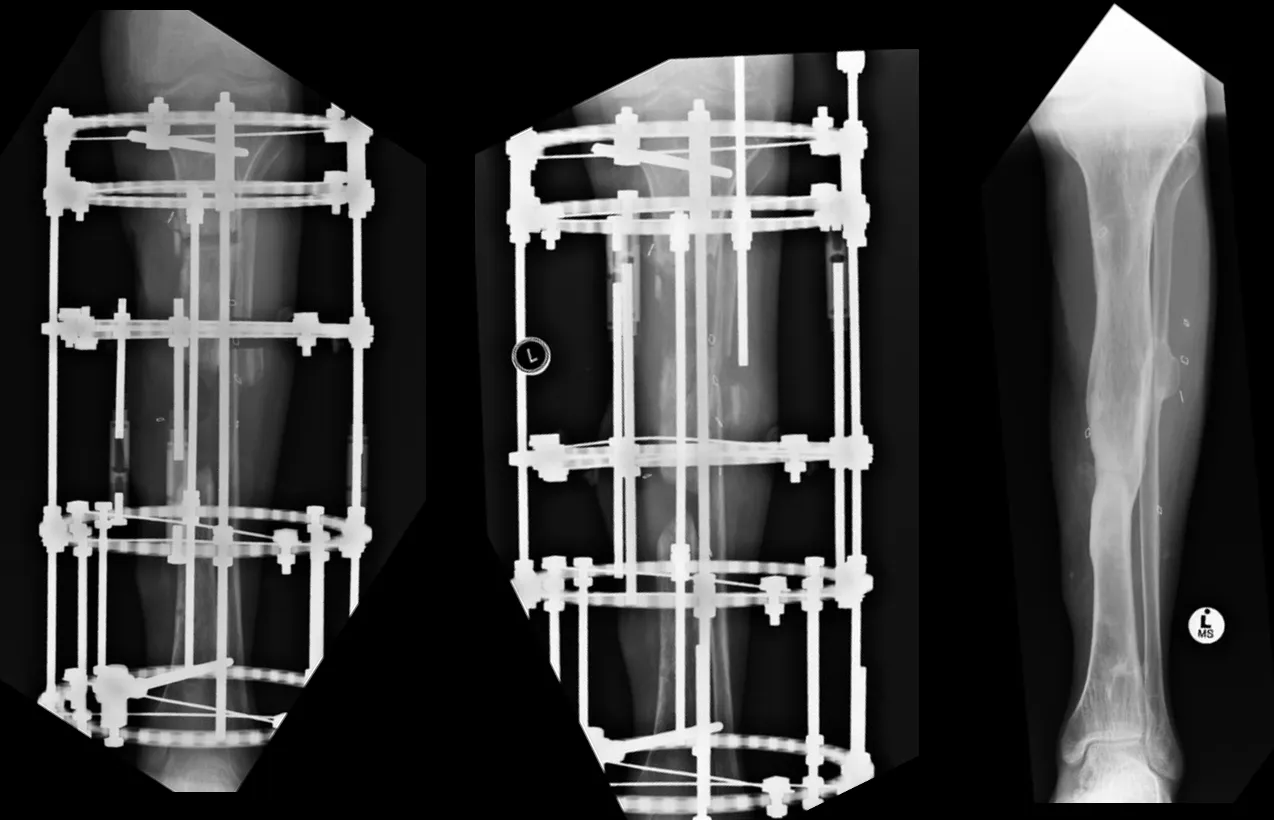
Fracture non-union
Fracture non-union occurs when a broken bone does not heal properly after a fracture, even with treatment. This happens because the bone ends do not get enough blood supply, stability, or proper healing environment. Patients may experience ongoing pain, swelling, and difficulty using the affected limb. Doctors diagnose non-union through imaging tests like X-rays or CT scans. Treatment options include surgery to stabilize the bone and promote new bone growth, sometimes with bone grafts to stimulate healing. Non-union treatment aims to restore stability and blood flow to the fracture site so the bone can heal fully.
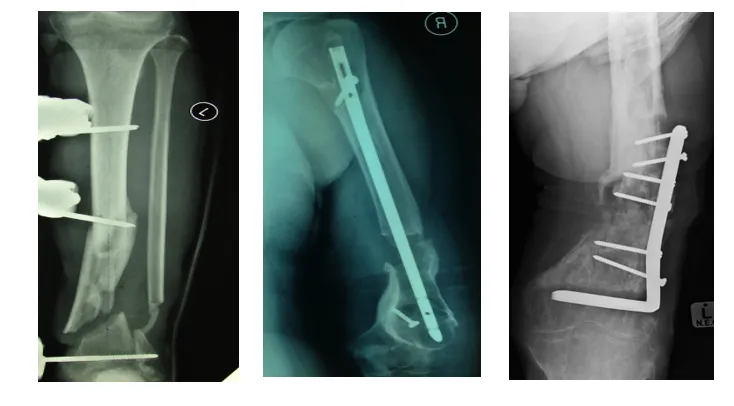
Malunions
Malunion of bone happens when a broken bone heals in the wrong position, causing the bone to be bent, twisted, or shortened. This can lead to pain, deformity, and difficulty using the affected limb. Treatment often involves surgery to correct the deformity and restore proper alignment. One common surgical method is called osteotomy, where the surgeon cuts the bone near the malunion and realigns it to the correct position. This can be done with internal fixation, using plates and screws or rods inside the body to hold the bone stable as it heals. For more complex deformities, gradual correction using a hexapod external fixator—a specialized metal frame around the limb connected to the bone with pins—can be used. This device allows the bone to be slowly moved back into the correct position over time, reducing risk and allowing careful adjustment. The choice between acute (immediate) correction with internal fixation and gradual correction with external fixation depends on the severity and type of deformity, patient health, and surgeon recommendation. Both approaches aim to reduce pain, improve function, and restore a normal appearance to the bone.

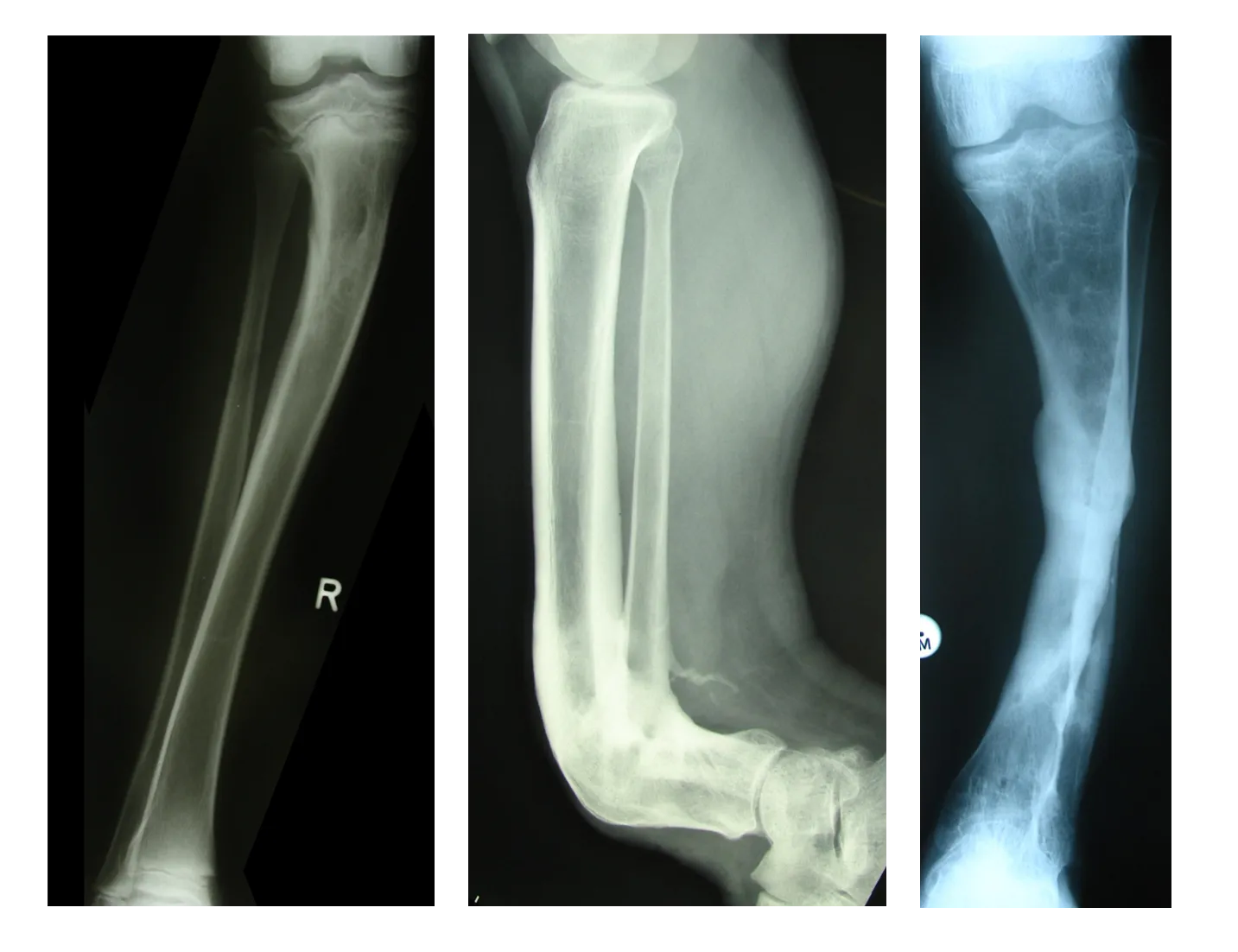
Deformities of bone
Non-traumatic bone deformities, such as congenital or developmental deformities, are conditions where bones do not form or grow correctly, often present from birth or developing during childhood. These deformities can affect the shape, size, or alignment of bones and may cause problems with movement, pain, or appearance. Common examples include limb length differences, bowed legs, or conditions like osteogenesis imperfecta (brittle bone disease). The causes can be genetic, related to abnormal bone growth or metabolic disorders, or due to developmental disruptions. Treatment usually focuses on correcting the deformity and improving function, often involving orthopaedic surgery. Surgical options include cutting and reshaping bones, using internal fixation like plates and screws, or external fixation devices that allow gradual correction over time. Early diagnosis and treatment by a specialized team can significantly improve outcomes and quality of life for patients with these bone deformities.
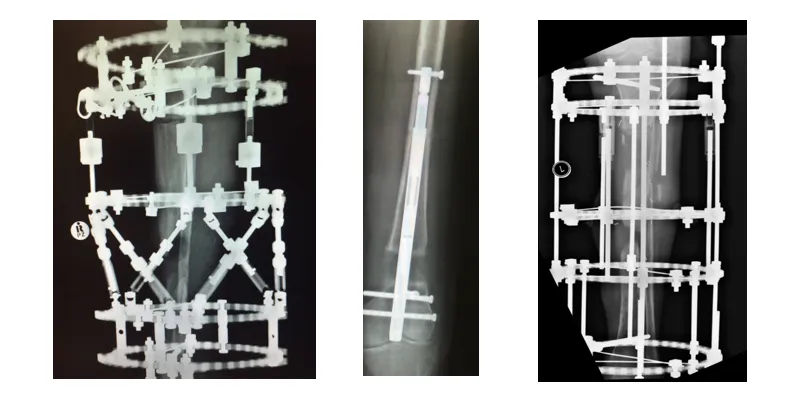
Limb length discrepancies
Leg length discrepancy (LLD) refers to a condition where one leg is shorter than the other, which can lead to symptoms such as pain in the hips, knees, ankle, lower back, or spine. Patients may also experience an uneven posture, limping or an awkward gait, instability, muscle fatigue, and difficulty walking or running. These symptoms arise because the body compensates for the uneven leg lengths, placing extra strain on muscles and joints on one side of the body. The causes of leg length discrepancy include structural differences in the bones (femur or tibia) often due to growth abnormalities, trauma such as fractures in childhood, or surgeries like hip replacements. Treatment depends on the severity of the discrepancy and the patient’s age and health. For minor discrepancies, shoe lifts or orthotics may suffice. For larger discrepancies, surgical options are considered, particularly limb lengthening procedures. Distraction osteogenesis is a common surgical treatment for significant leg length discrepancy. This process involves cutting the bone and gradually pulling it apart to allow new bone to form in the gap. This can be done using intramedullary lengthening nails, which are rods inserted inside the bone’s medullary canal and lengthened magnetically in a controlled manner from within the leg. Alternatively, circular external fixators, which are rings fixed around the leg with wires or pins, allow bone lengthening externally. Both methods work by slowly stretching the bone and surrounding tissues, promoting new bone growth to achieve limb length equality. Intramedullary nails offer the benefit of being internal, reducing infection risks and improving patient comfort, while circular external fixators provide excellent control over bone alignment during the lengthening process. These treatments require close monitoring to ensure proper bone healing and optimal outcomes.
Amputations
Amputation can be an excellent reconstruction option for some severe limb conditions, providing pain relief and improved function where other treatments are not feasible. However, after amputation, certain complications or issues may arise that require ongoing management by an orthopaedic surgeon. These issues can include soft tissue problems affecting the fit and comfort of the prosthetic limb, such as skin irritation, pressure sores, or swelling. Another common problem is the development of painful neuromas, which are nerve tissue growths at the amputation site that can cause persistent pain and affect prosthetic use. Orthopaedic surgeons also manage these complications to optimize prosthetic fit and patient comfort. Recently, osteointegrated prostheses have become available as an advanced option. Unlike traditional prosthetics, which rely on a socket fitted around the residual limb, osteointegrated prostheses involve a direct connection between a metal implant anchored in the bone and the external prosthetic limb. This integration offers improved stability, control, and comfort, as well as better prosthetic function by transferring forces directly through the bone, reducing the problems related to socket fit. This approach represents a significant advancement in prosthetic technology.